
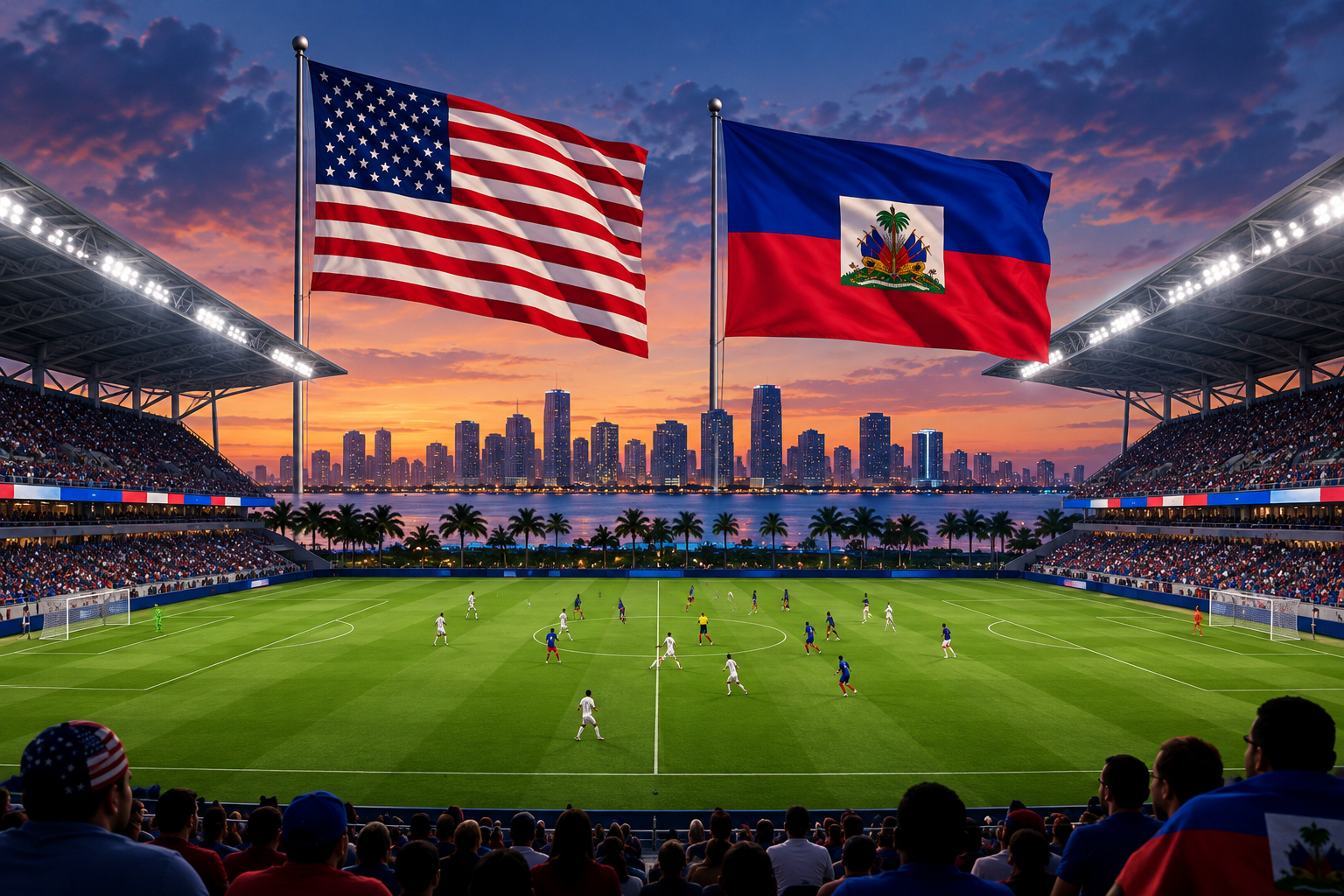
CONFIRMED
Haiti’s home leg of the Concacaf Nations League quarterfinal against the USMNT is moving from Kingston to Miami. Concacaf confirmed on Oct 22, 2026 that its Council approved the switch because of the ongoing security situation in Haiti. The date holds at Saturday, Nov 14, and both legs of the tie will now be played on US soil.
What we know
Concacaf announced that its Council approved an “exceptional hosting arrangement” for the Haitian Football Federation (FHF), citing the ongoing security situation in Haiti. The decision came after the FHF submitted a formal request.
The match had been set for Sabina Park in Kingston, Jamaica, on Saturday, Nov 14. Concacaf confirmed it will now be played at Nu Stadium in Miami, Florida, with kickoff at 4:30 pm ET. The date has not changed. Only the city, the country and the stadium have.
Here is the quirk that will make referees and rules nerds sit up. Concacaf’s release says the match goes ahead “in the territory of the opposing Member Association.” In plain terms, Haiti stays the designated home side, but that home game is staged in the United States, the backyard of the team they are hosting.
Concacaf also drew tight lines around the decision. The governing body says the arrangement covers Haiti’s home-designated match against the United States in the 2026/27 Nations League quarterfinals. It is a Haiti-specific measure, it is subject to ongoing review, and the Concacaf Council may amend or withdraw it at any time.
USA TODAY Sports, reporting the Concacaf statement, said the USMNT will face Haiti in Miami instead of Jamaica for the first leg. The outlet added that Concacaf said this flexibility stays in place for as long as the security situation in Haiti persists.
Coverage of the switch also noted that it will be the USMNT’s first match at Nu Stadium since the venue opened earlier this year.
What we don’t know yet
Concacaf’s release dealt with the first leg only. The return fixture comes from earlier reporting. On Oct 11, Soccer America reported the second leg was set for Nov 17 in Cincinnati, and nothing in the Oct 22 announcement suggests that has moved.
We also don’t know how the “home” label will play out on the day. Concacaf has not detailed ticketing, fan allocation or any other matchday arrangements in the release we reviewed.
Then there is the longer view. Concacaf calls this a Haiti-specific measure under ongoing review, so whether the same approach applies to future Haiti home fixtures has not been announced. ESPN, The New York Times, SBI Soccer, Soccer America and USA Today all ran the story, but only the Concacaf release and the USA TODAY Sports text were read in full for this piece.
What it means
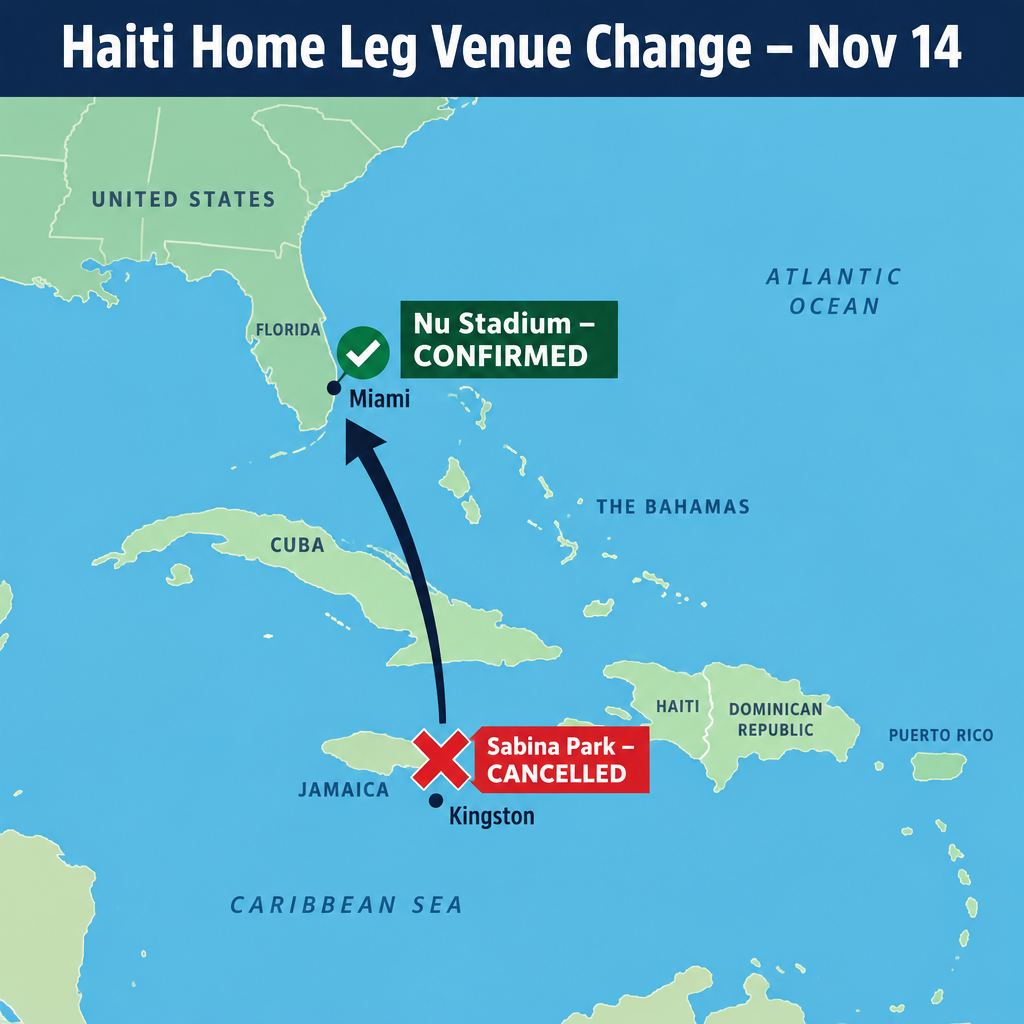
For Haiti, this continues a long run of playing “home” games away from home. In the group stage earlier this month, Haiti hosted both of its home matches at Sabina Park, Jamaica’s national cricket ground in Kingston. Haiti’s home fixtures have been staged abroad because of the security situation. A syndicated report we could not verify says Haiti has been unable to play at home since July 2021, with Curaçao, Aruba and Barbados hosting earlier World Cup qualifiers.
Kingston at least offered a Caribbean setting. Miami removes even that, and puts the Haitian side on the opponent’s turf for a match they are formally hosting. On paper it is Haiti’s home leg. In practice, the USMNT gets both legs of a quarterfinal in the United States, first in Miami on Nov 14 and then, per Soccer America, in Cincinnati on Nov 17.
Be fair to Concacaf here. The release frames the move as an exception granted at the FHF’s own request and tied to security, not convenience. The real story is a federation that keeps doing its job without a home ground to stand on.